


Reimagining Portland: Part 3
Following the Population Shift: Numbers Don’t Lie
Before we begin (again), I’d like to share a brief update about this series.
As I was finishing what I originally intended to be the third and final installment of Reimagining Portland, I realized something. The future of Portland, and particularly the conversation surrounding the Trail Blazers, the Moda Center, and downtown revitalization, continues to evolve. New information, new perspectives, and new developments seem to emerge daily, making it difficult to capture everything in a single article.
Rather than rush through the conclusion, I’ve decided to expand Reimagining Portland into an ongoing series. This also seemed like the right time to give each article its own subtitle, making it easier for readers to follow the journey:
Part 1: Falling in Love with Portland
Part 2: When the City Around Us Changed
Part 3: Following the Population Shift: The Numbers Don’t Lie
Part 4: Come Together
Part 5: (Subtitle to be announced.)
The first three parts are mostly personal, about our family, why we moved here and what we’ve witnessed. You can cut to the chase and start at Part 4 if you’re just here for the Portland insight in regard for the need for solutions to the many issues the city faces.
One thing I’ve found discouraging as I’ve followed this discussion, and relatd posts and comments. is how quickly it has become polarized. Instead of respectfully debating the merits and drawbacks of public investment, too often the conversation turns to assumptions about motives, dismissing opposing viewpoints, and personal attacks. It reminds me of the broader climate we see throughout our country, where many important conversations have become more about choosing sides than listening to one another.
Portland deserves better as I’ve always found Portland to be better than this. I get the frustration many of us feel, but let’s keep the tone positive and centered around fact based research and reasoning.
Whether someone supports public investment or opposes it, every opinion deserves to be heard and thoughtfully considered. This isn’t simply a debate about a sports arena. It’s about the future of our city and how we choose to address the challenges unfolding on our streets, in our neighborhoods, and throughout our community.
My hope is that Reimagining Portland encourages conversation rather than division. None of us has all the answers, but together we have a much better chance of finding them. We may never agree on every solution, but we can still listen with open minds, treat one another with respect, and move forward together. That’s how strong communities solve difficult problems, and I believe Portland can do exactly that.
With that in mind, let’s look at what the numbers tell us.
Following up on Part 1 and Part 2, when I looked more closely at the migration data, I realized my wife and I had quietly become part of the story ourselves.
We loved our home in Eastmoreland. We loved our neighbors, the history of the neighborhood, and everything that had drawn us there in the first place. Leaving Multnomah County and Portland for a neighboring County wasn’t an easy decision, nor was it driven by any single issue. Like many families, we simply reached a point where we began asking what we wanted the next chapter of our lives to look like.
The population data suggests we weren’t alone.
For nearly three decades, Multnomah County grew from roughly 584,000 residents to more than 815,000 residents, an increase of nearly 40 percent. Then, after the 2020 Census, the trend reversed. The county lost roughly 20,000 residents over the next few years before beginning to stabilize.
At first glance, those numbers might suggest people were abandoning Oregon. But that isn’t what happened.
Many households simply moved out of Multnomah county to elsewhere within the Portland metropolitan area, or to other parts of the state.
Clark County, just across the Columbia River in Washington continued to grow. The housing was more affordable, the redevelopment of the Vancouver waterfront into an exciting and entertaining place to live or visit was a draw, and the attraction of living near a major airport (PDX) in a tax free state where you can drive across the border and shop tax free was appealing to many.
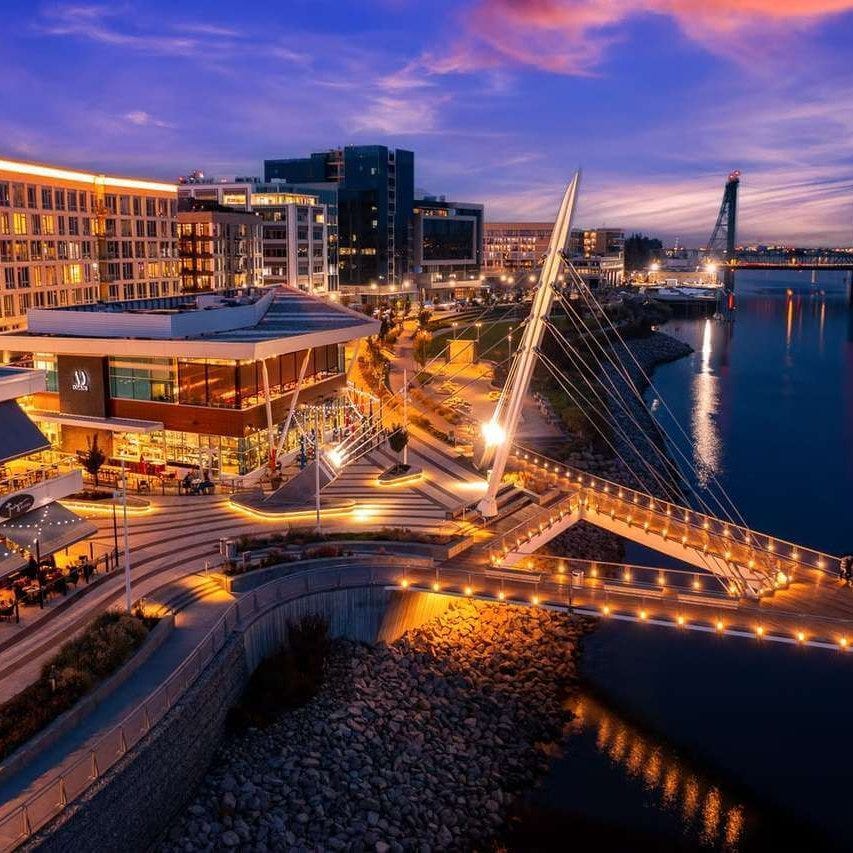
Clackamas County, where we ended up moving, added residents. Many people who moved here weren't leaving the Portland region. They were seeking more space, better housing value, quieter neighborhoods, and a lifestyle that better fit their stage of life while remaining close to family, work, and everything the Portland metropolitan area has to offer.
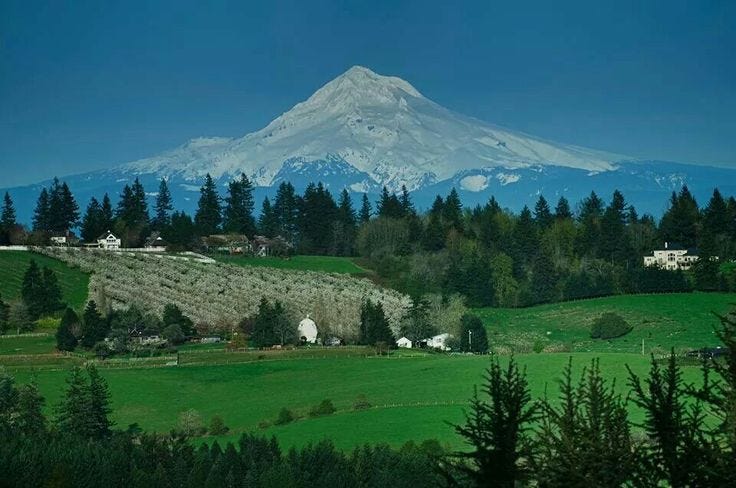
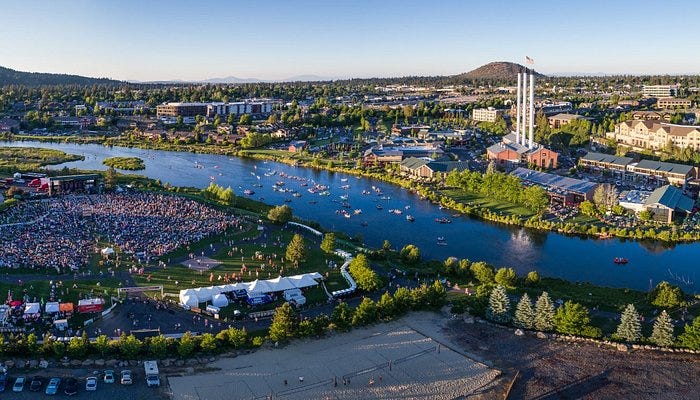
Bend Oregon, three hours from Portland in the central part of the state, has been one of the fastest-growing cities in the Pacific Northwest for more than two decades. Bend's appeal is easy to understand. It averages about 31% more sunny days than Portland, offers easy access to world-class outdoor recreation, and has become one of the Pacific Northwest's fastest-growing cities, with its population increasing by more than 106% since 2000. During the same five-year period that Multnomah County's population declined by about 2.5 percent following the 2020 Census, Bend continued to grow by more than 8 percent.
Others relocated to places like Boise, Arizona, Texas, or Florida. Every family had its own reasons, but together they reflected a common desire to find the lifestyle that best matched the next stage of life.
My wife and I came to a similar conclusion.
As retirement approached, we realized we wanted a little more space, a little more quiet, and a property that would keep us active for years to come. We weren’t looking to leave the Portland region. We were looking for a place where retirement felt like an adventure instead of simply slowing down.
That search eventually brought us to West Linn.
Our property taxes were lower. Our water came from a well. The acre surrounding our home gave us landscaping projects that became both our exercise and our entertainment…and we found ourselves spending more evenings outside than in front of a television, watching the family of deer who lived in our yard, teach their fawn how to survive.

One evening, shortly after moving in, my wife and I were sitting on our back deck when we heard children laughing. We looked at each other and quickly realized some neighborhood kids were playing “Kick The Can” as dusk settled over the street. I loved playing that growing up.
For a moment, I felt like I had stepped back into my own childhood.
Not because children were playing outside. That still happens in many places. It was because their parents felt comfortable enough to let them. It reminded me that communities are shaped as much by the feeling they create as by the homes themselves.
That experience reinforced something I had begun seeing in the migration data. Many people weren’t leaving the Portland area because they had stopped loving Oregon. They were simply searching for a community that better matched where they were in life, and many had become disappointed with the return they were getting by living in Multnomah County. What seemed like a great place to live when we first started visiting the area ten years earlier, now had its share of problems and things didn’t seem to be getting better.
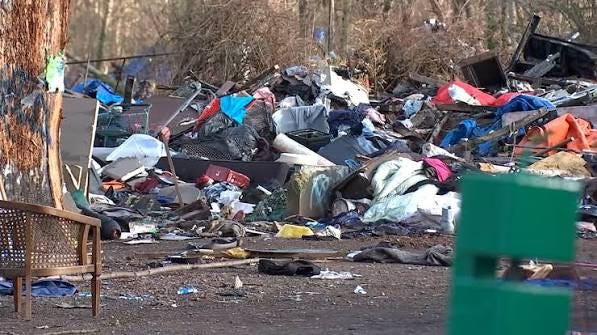
Outside of the homeless and addiction crisis, Portland remains one of the most beautiful cities in America. Few places offer the combination of rivers, forests, mountains, coastline, world class food, arts, music, sports, and outdoor recreation that exists here. The region is home to innovative companies, leading universities, exceptional healthcare institutions, and generations of creative people who continue to shape its identity.
Those strengths haven’t disappeared.
They’ve simply been overshadowed by challenges that, while very real, are not beyond our ability to solve, which we’ll start looking into in…
Part 4: Come Together.
Great job thanks John. Excellent use of pics!
At this point, I’m leaving Portland—and taking my wasted tax dollars with me.
The combination of high taxes, poor services, government dysfunction, and an increasingly intolerant political culture has simply become too much. It feels like you can’t disagree with the prevailing far-left orthodoxy without being labeled, attacked, or treated as the enemy.
Portland used to have positive attributes, but a city can’t thrive when it demands ideological conformity while delivering less and less for the taxes people pay. Sometimes the best way to make your point is to take your wallet and leave.